Am I willing to learn?
By Dr. Julie Pham and Nancy Bacon
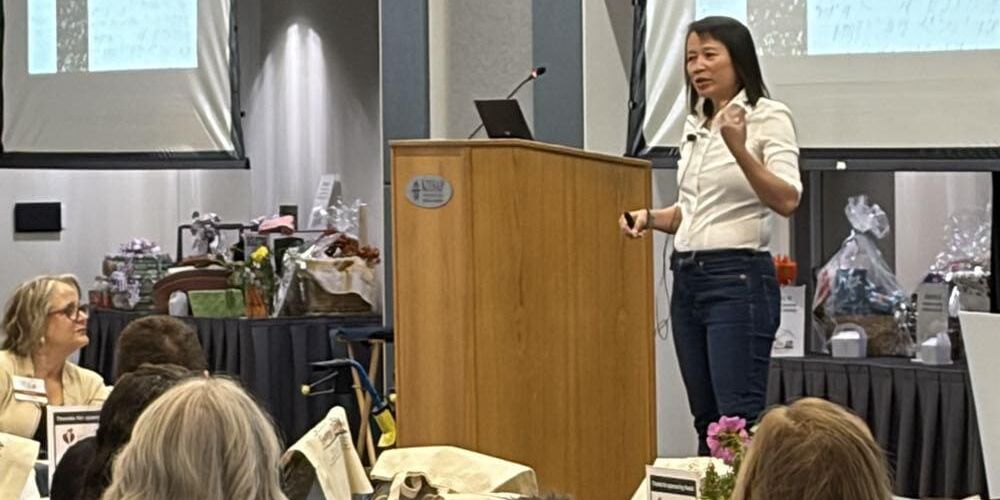
At Washington Food Coalition's September conference, keynote speaker Dr. Julie Pham, founder of CuriosityBased, invited us to think about curiosity as something we practice. We often think of curiosity as a personality trait—something we either have or don't. But like anything we want to get better at, curiosity takes intention, effort, and repetition. Her message raised an important question for our hunger relief community: Am I willing to learn from others, especially when we see things differently?
It's easy to wish other people were more curious. But how curious are we?
That question came into focus during Julie's keynote, when participants were asked to identify what gets in the way of curiosity in our hunger relief community—and then to consider what gets in the way of their own curiosity.
When asked what prevents people in our hunger relief community from practicing curiosity, 77 of 160 participants (48%) selected a lack of willingness to understand different worldviews. But when asked what prevents them personally from practicing curiosity, only 14 of 138 participants (10%) selected difficulty understanding worldviews different from their own.
We seem much more likely to recognize a lack of curiosity in others than to recognize it in ourselves. That's worth reflecting on.


Curiosity isn't always easy. You are doing demanding work. You are navigating limited resources, responding to growing needs, managing relationships, and making difficult decisions. Sometimes we're simply too busy or too tired to engage in another conversation.
Fear also matters. We may worry about being misunderstood, creating conflict, or damaging relationships. When resources are scarce and the needs are great, tensions can rise. We are in a very human business where emotions, relationships, and trust matter. Practicing curiosity doesn't mean ignoring fear or pretending that every conversation is safe.
But it does invite us to ask what might be possible if we approached one another with a greater willingness to learn.
What if we asked someone what led them to a decision rather than assuming we already know? What if we approached a disagreement with a question instead of a conclusion? What if we entered a difficult conversation genuinely interested in what we might learn?
One conference participant captured the spirit of the keynote beautifully: “Be curious, be brave, be wrong sometimes.”
The conference theme, “Setting Every Table,” was a call to everyone in our hunger relief community to play a part in ensuring that every person has access to the food they need with dignity. That same spirit of shared responsibility came through in the curiosity conversation. When asked who is responsible for encouraging curiosity, 135 participants responded:
organizational leaders (96%), frontline staff (84%), volunteers (64%), sector leaders (73%), government agencies (66%), and Washington Food Coalition (74%).That's an important reminder. Building a community where people are willing to learn from each other isn't someone else's responsibility. It's something we create together, one conversation at a time.

We don't have to agree on everything. We don't have to resolve every disagreement in one conversation. But we can keep asking questions, listening to different perspectives, and making room for conversations that might otherwise never happen.
Am I willing to learn? Am I willing to learn from you?
That's how we practice curiosity. And that's how we strengthen our hunger relief community.